
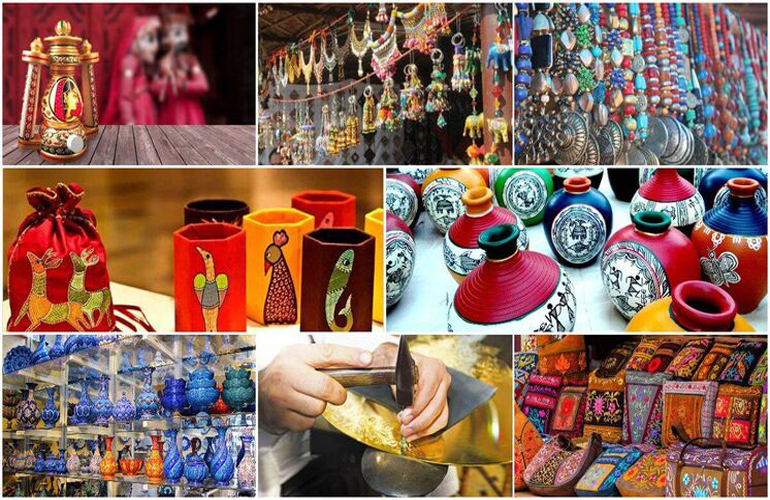
Handicraft Items
Handicraft items are manually created artifacts that reflect the cultural heritage, artistic skill, and traditional knowledge of the communities that produce them, often passed down through generations. Unlike mass-produced goods, handicrafts emphasize individuality, craftsmanship, and the use of natural or locally sourced materials such as wood, clay, metal, fabric, bamboo, and stone. Each piece typically carries the imprint of the artisan’s creativity, with intricate techniques—such as carving, weaving, embroidery, pottery, metalwork, and hand-looming—requiring years of practice to master. Handicrafts serve multiple purposes: they can be utilitarian, decorative, ritualistic, or symbolic, often embodying regional stories, motifs, and cultural identity.
Economically, handicrafts support rural and small-scale artisans, playing a vital role in sustainable livelihoods and the preservation of traditional art forms threatened by industrialization. Environmentally, they tend to have a low carbon footprint because they rely on manual labor and natural resources rather than heavy machinery. In global markets, handicraft items are valued for their authenticity, uniqueness, and aesthetic richness, appealing to those who seek meaningful, handcrafted alternatives to standardized products. Through their artistry, handicrafts represent a bridge between tradition and modernity, keeping cultural heritage alive while providing timeless beauty and craftsmanship.

Send An Enquiry