
Spices
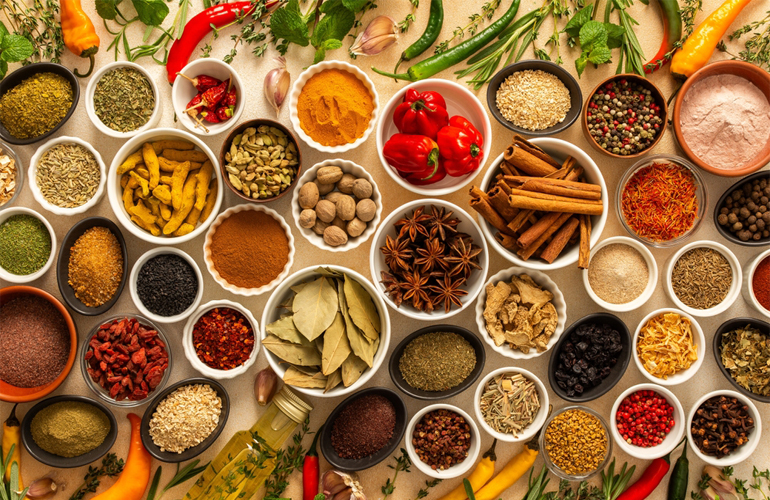
Spices are aromatic plant substances—such as seeds, bark, roots, fruits, and dried buds—used to enhance the flavor, color, and aroma of food, and they hold deep cultural, culinary, and medicinal significance across civilizations. Originating largely from tropical regions of Asia, Africa, and the Middle East, spices like cinnamon, black pepper, turmeric, cardamom, cumin, and cloves have shaped global trade and history, fueling exploration, cultural exchange, and economic power for centuries. Chemically, spices are rich in essential oils, alkaloids, and antioxidants, which not only provide intense flavors and distinctive aromas but also contribute to their antimicrobial, anti-inflammatory, and therapeutic properties widely used in traditional systems like Ayurveda and Unani.
Each spice has its own sensory profile—ranging from the heat of chili and the earthiness of cumin to the sweetness of cinnamon and the floral notes of cardamom—allowing cooks to create complex layers of taste in dishes. Beyond their culinary role, spices are central to preservation methods, ritual practices, and regional identities, forming the backbone of iconic blends such as garam masala, ras el hanout, and curry powders. Their global importance persists today, as modern research continues to explore their health benefits and their ability to transform simple ingredients into aromatic, multidimensional culinary experiences.

Send An Enquiry